
Why Sports Highlights Still Take Too Long to Produce
Fans want clips in seconds. The current production pipeline takes minutes to hours. Here's where the gap is — and what it would take to close it.
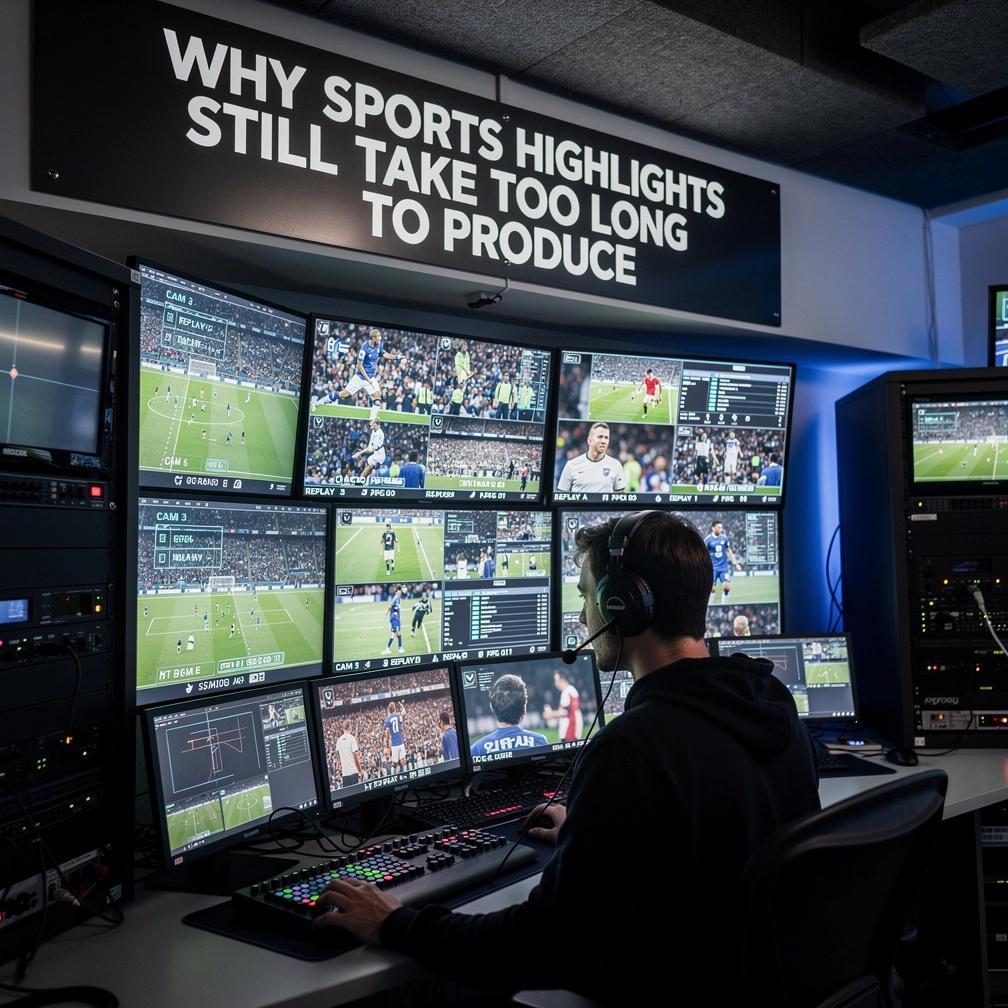
A goal is scored. Within seconds, millions of fans are searching for the clip. Within minutes, social media accounts are posting screen recordings from their TV. The official broadcast highlight? That might take 15 to 45 minutes. Sometimes longer.
The Current Pipeline
Here's what typically happens after a key moment in a live match: a logger marks the event timestamp, a replay operator isolates the clip, an editor trims and packages it with graphics and commentary, a producer reviews and approves it, and finally someone exports and uploads it to each distribution platform.
Each step requires a human making decisions. Each handoff adds time. For a full match highlight reel, the process can take an hour or more after the final whistle — by which point most fans have already seen the moments they care about through unofficial channels.
What Fans and Platforms Actually Want
The expectation has shifted dramatically. Social platforms want clips within 30 seconds of a key moment. Streaming services want near-live highlight feeds. Betting platforms want instant event confirmation. None of these timelines are achievable with a purely manual workflow.
Where Automation Makes Sense
The parts of the pipeline that AI can genuinely help with are the mechanical ones: detecting that a goal was scored, identifying the relevant camera angles, assembling a rough clip package, and preparing it for multiple output formats simultaneously.
What AI shouldn't replace is the editorial judgment — deciding how to tell the story, which angle creates the most drama, what context matters. That's the craft. The goal is to compress the time between 'something happened' and 'here's a watchable clip' from minutes to seconds, while keeping humans in control of the story.
This is exactly the problem RISE is designed to solve. Not by removing people from the process, but by eliminating the mechanical bottlenecks that prevent them from working at the speed the audience now expects.